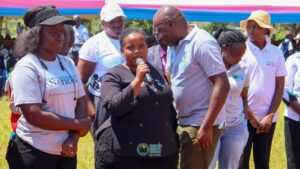
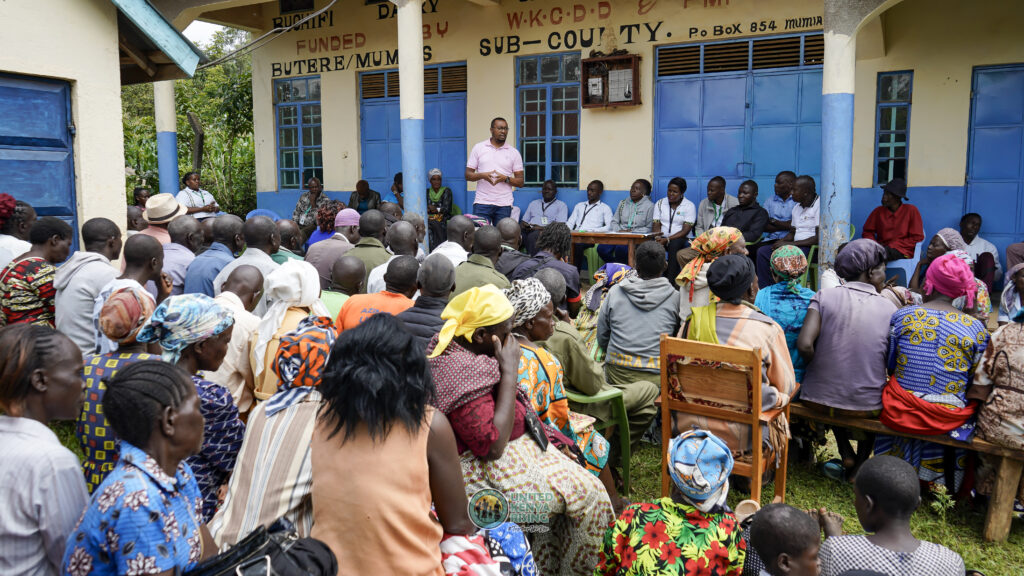
Caption: Shaban (from National Social Protection Secretariat) speaking to Buchifi resident during the data verification exercise | Photo by Okoth John
For years, United Kenya Rising (UKR) has empowered vulnerable families through its Family Care Program, walking alongside households on a three-year journey towards dignity, resilience, and self-reliance.
At the center of this work lies a critical responsibility: ensuring that support reaches the families who need it most through processes that are fair, transparent, and accountable.
Traditionally, UKR identified potential beneficiaries through referrals from local administration structures including Chiefs, Assistant Chiefs, and Village Elders. The approach worked well in many communities and leveraged the local leaders’ understanding of household circumstances and vulnerabilities.
However, as the organization continued to grow and strengthen its systems, UKR recognized the need to explore approaches that would further enhance transparency and reduce human influence in beneficiary selection. While community referrals remained valuable, there were instances where concerns about bias or perceived favoritism could arise because of the human element involved in the process.
In response, UKR embarked on a process to identify a more objective and data-driven approach that would complement community participation while improving targeting accuracy.
The initiative was spearheaded by the Partnerships and Resource Mobilization Department under the leadership of Lilian Kisienya, which initiated discussions with the Kenya National Bureau of Statistics at the county level to explore opportunities for utilizing government data systems in beneficiary identification.
While KNBS maintains extensive national datasets, county officials advised that vulnerability targeting would be more effectively supported through the Government’s social protection systems managed by the Department of Social Protection and the National Social Protection Secretariat.
This engagement introduced UKR to the Enhanced Single Registry (ESR), an integrated government social protection information system that consolidates data from various social protection programmes and databases to support the identification and targeting of vulnerable households across the country.
For UKR, this represented a significant milestone. It would be the first time the organization would utilize the Enhanced Single Registry in identifying potential beneficiaries for the Family Care Programme.
The transition also aligns with the evolving expectations of Kenya’s Public Benefit Organizations sector, where organizations are increasingly encouraged to adopt systems that promote accountability, transparency, evidence-based programming, and responsible use of data in beneficiary targeting.
Before implementation commenced, officials from the National Social Protection Secretariat conducted capacity-building sessions for UKR staff on how the registry functions, the broader government integrated systems framework, and the responsibilities associated with handling sensitive household information.
The training included sessions on data protection, safeguarding, confidentiality, and ethical use of social protection data, ensuring that UKR staff understood not only how to use the information responsibly but also the importance of protecting the dignity and privacy of the families whose information had been entrusted to government systems.
The process officially began in March 2026 and continued through the end of April with consultations, planning, and institutional preparations between UKR and government stakeholders.
The second phase commenced in May 2026 with one of the most important stages of the process: community data verification.
Officials from the National Social Protection Secretariat travelled to the communities and organized public barazas aimed at validating whether the records contained within government systems accurately reflected the households residing within those communities.
The verification exercise was conducted in Buchifi and Jepkoyai, with Jepkoyai identified as a future implementation zone for the Family Care Program.
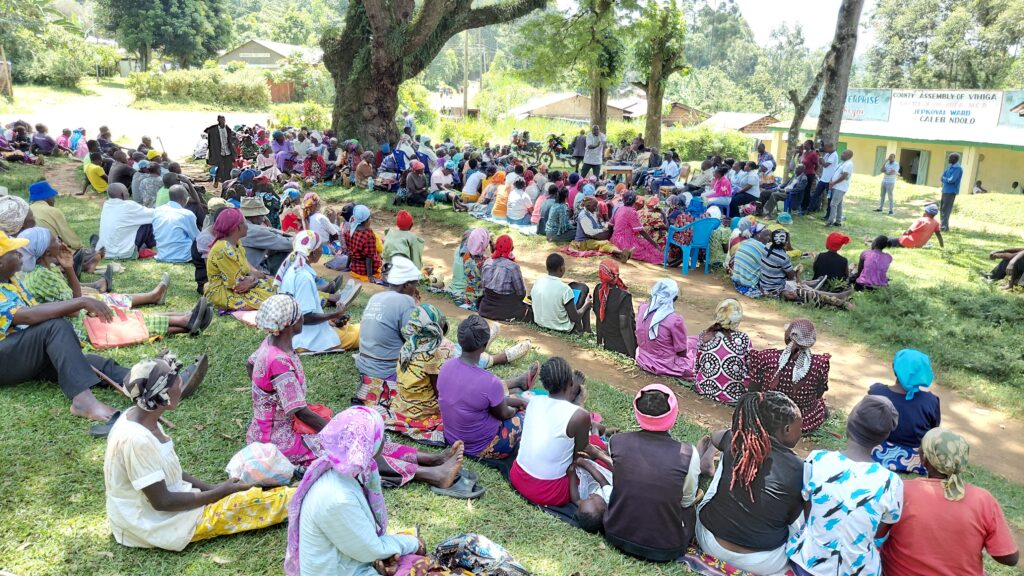
Caption: UKR CEO Nelson Ida Addressing Jepkoyai residents during data verification exercise in Jepkoyai | Photo by Victor Birai
Importantly, the process demonstrated that the use of data does not replace community participation. Instead, community involvement remained central to ensuring the accuracy and credibility of the information contained within the registry.
Community members verified that the records reflected the realities on the ground and confirmed the data to be accurate and representative of vulnerable households within their localities.
The barazas also provided an opportunity for both Government and UKR teams to communicate key messages to community members. Residents were taken through how UKR had gained access to the information, the safeguarding and data protection measures in place, the methodology for beneficiary identification, and the various stages that would follow before any final enrollment decisions were made.
This communication was essential in promoting transparency and managing expectations by helping communities understand that appearing within the registry did not automatically guarantee enrollment into the programme, but rather marked the beginning of a comprehensive assessment process.
The process involved a multi-sectoral team of government officials including Shaban Alaawy and Geoffrey Mutysio from the National Social Protection Secretariat, Grace Nekesa, Reuben Tonui, Dorcas Wakasa and Judith Wambia.
Speaking during the engagement, Shaban emphasized the importance of utilizing the Enhanced Single Registry in beneficiary identification, noting that the approach would improve programme implementation and significantly ease the beneficiary selection process.
He further observed that because the Government remains a credible source of data, organizations that utilize the registry strengthen the credibility of their own processes among donors, partners, and other stakeholders.
“The Government is a trusted custodian of social protection data. Utilizing these systems strengthens confidence in beneficiary targeting and enhances the credibility of program implementation among partners and donors,” he noted.
Following the verification exercise, UKR proceeded with baseline assessments conducted with support from local administration structures. The assessments involved household visits and surveys using UKR’s Family Needs Selection Criteria to gain a deeper understanding of each household’s circumstances and vulnerabilities.
The baseline assessments were followed by pre-selection using UKR’s internal scoring mechanism, intake assessments, final beneficiary selection, inductions, and eventually enrollment into the Family Care Programme.
This layered approach combines the strengths of government social protection systems with UKR’s family-centered assessment methodologies to ensure that support reaches households with the greatest need and the highest potential for transformation.
The first application of this approach resulted in the successful enrollment of 50 families from Buchifi Location into Cohort 7 of the UKR Family Care Program.
Welcoming the transition, UKR Chief Executive Officer Ida Nelson described the adoption of ESR as an important step in the organization’s institutional growth journey.
“As an organization, UKR continues to grow and improve its systems. This shift towards utilizing the Enhanced Single Registry has come at the right time and will significantly strengthen our processes as we continue serving vulnerable families and communities,” he said.
As UKR continues to evolve, the organization remains committed to adopting approaches that strengthen accountability, improve program quality, and uphold the dignity of the families it serves.
The adoption of the Enhanced Single Registry represents more than a new method of beneficiary identification. It reflects UKR’s commitment to learning, collaboration, and continuous improvement, while demonstrating the value of partnerships between government institutions, communities, and civil society organizations in ensuring that no vulnerable family is left behind.
Through stronger systems, better data, and meaningful partnerships, UKR continues to build pathways for families to rise.